Post tension slabs changed the rules. Cutting blind isn't one of them.
A slab leak in a twenty year old house feels like a clerical error. This is supposed to be an old house problem, and yours was built with modern methods in a modern era. Here's the Valley's asterisk. The water. Temecula's famously hard water has been working on every line in the neighborhood since the day it went in, and under slabs, where the hot lines run warmest, the mineral work goes fastest. The Valley's slab leaks are arriving ahead of schedule, and whole streets will meet them on roughly the same timeline.
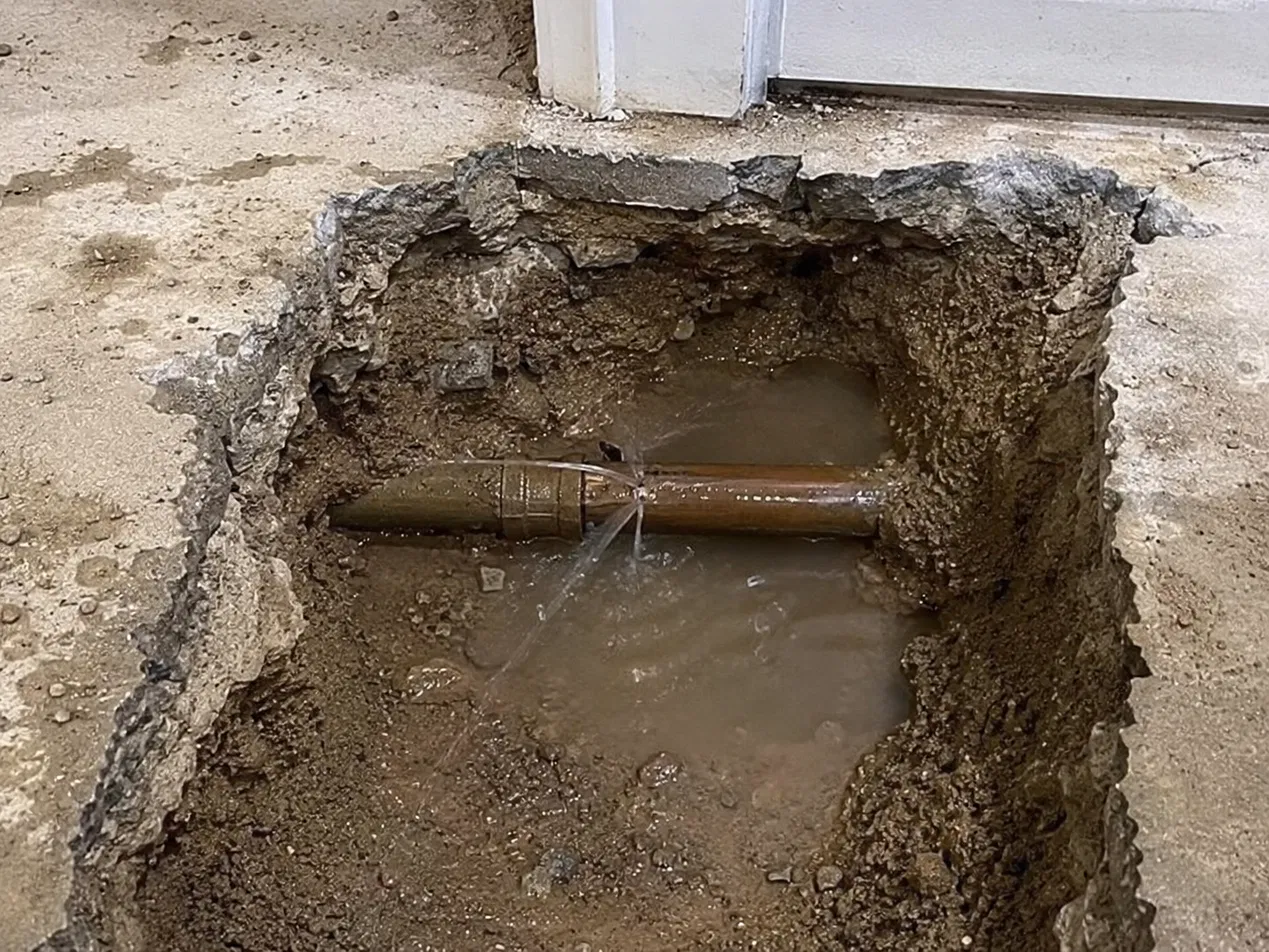
Yours doesn't have to be dramatic. Detection first, entirely non destructive, the equipment locating the leak through the concrete within inches before any conversation about fixes. Then the options, and in newer construction they're genuinely good. A precise access at the marked spot, clean and contained. Or the reroute, abandoning the affected run and carrying new line overhead, no slab work, no floor work, a fix that leaves a young house looking exactly as young as it is. The evidence picks the path, and the footage and findings stay yours.
Worth knowing for the longer game, in a neighborhood where every house shares an install year, your leak is diagnostic gold, for you and eventually for the street. The honest conversation covers what this failure suggests about the system, what to watch, and when the bigger conversations genuinely apply versus when one fix is truly the end of it. Plain English, real tradeoffs, your decision at your pace, a licensed contractor performing the work on go. Young houses, hard water, precise fixes. That's the Valley's slab leak story, and it's a manageable one.
"In a post tension slab, where you don't cut matters most."