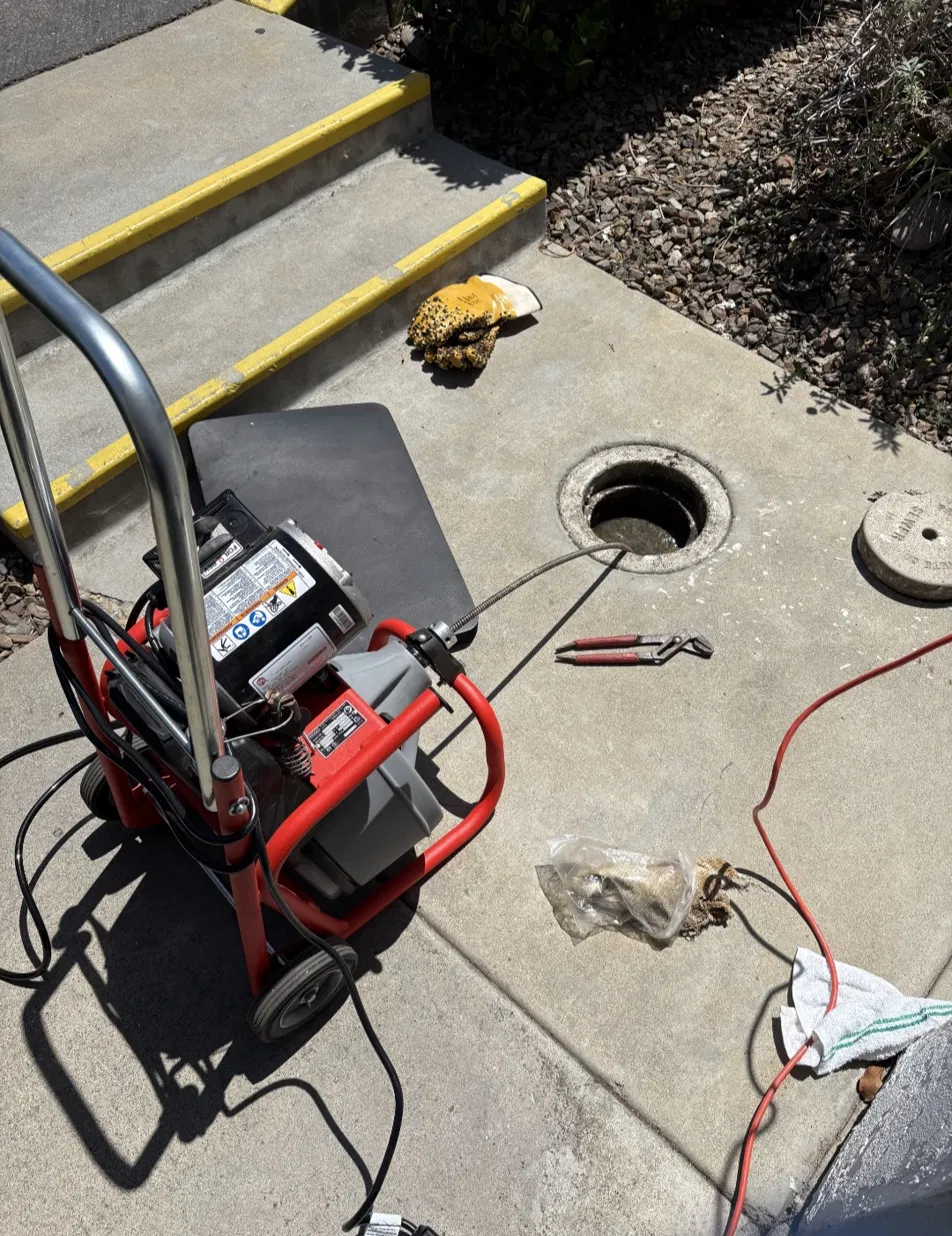
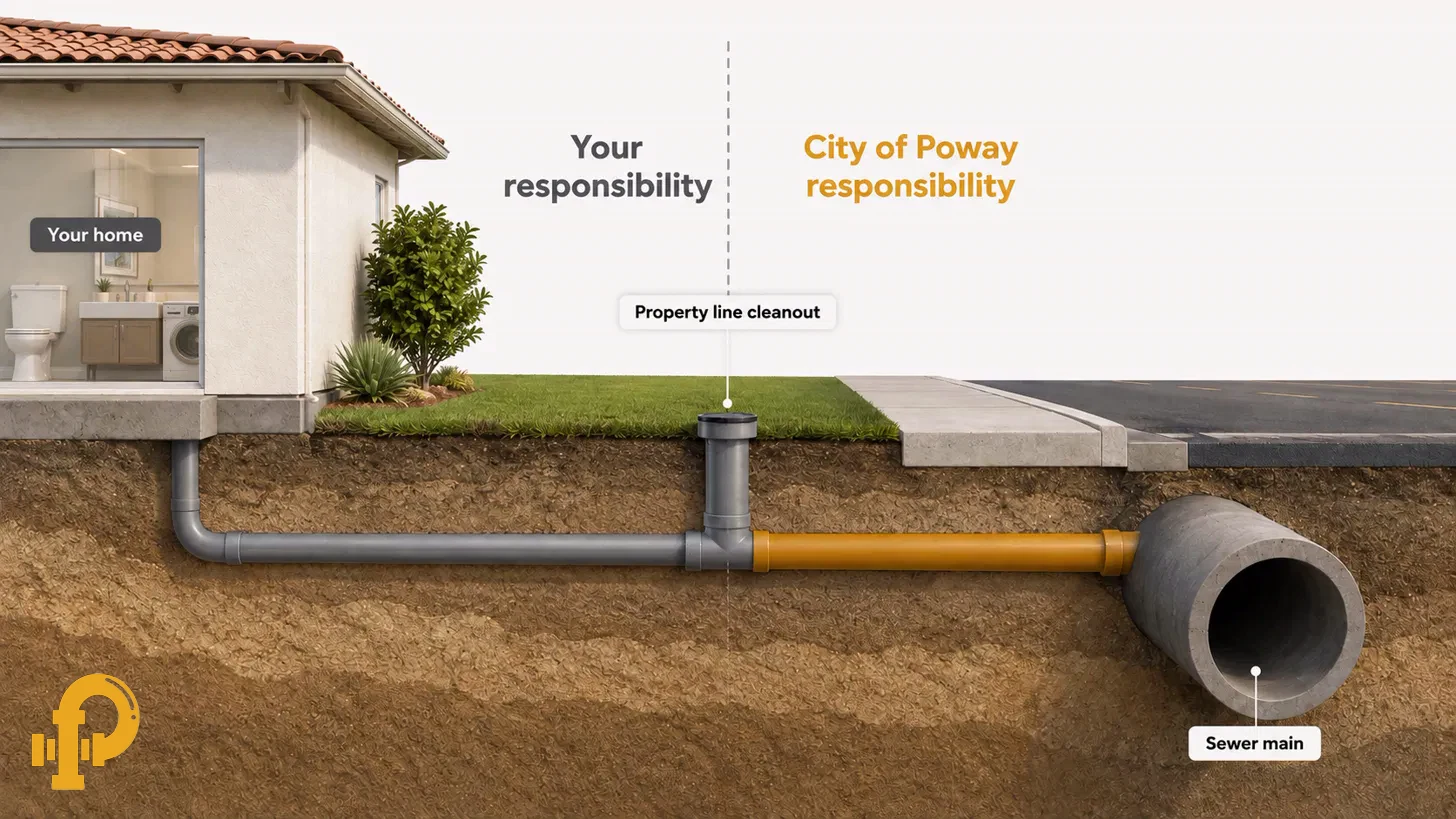
Most Poway homeowners have no idea this exists, so here's the short version. According to the City of Poway, if you're having a sewer problem at your home, the City will clean your sewer lateral from the property line cleanout out to the sewer main, free of charge. The City states it's the only city in San Diego County that takes responsibility for that stretch of pipe.
That's unusual for the county. In almost every other city in the county, that pipe is yours. It runs under your parkway, under the sidewalk, under the street, and all the way to the connection at the main, and every inch of it is the homeowner's problem. San Diego generally holds owners responsible out to the main. Santee generally holds owners responsible for maintaining the full lateral, including the portion out in the public right of way, though Padre Dam says that when a plumber's documentation shows a repair problem there, not a maintenance issue, it makes that repair at no cost to the owner. Poway drew the line in a different place, and the part beyond your property line is on them.
Now the catch, and it's a real one.
The catch is the cleanout
The City's free cleaning starts at the property line cleanout, not at your house.
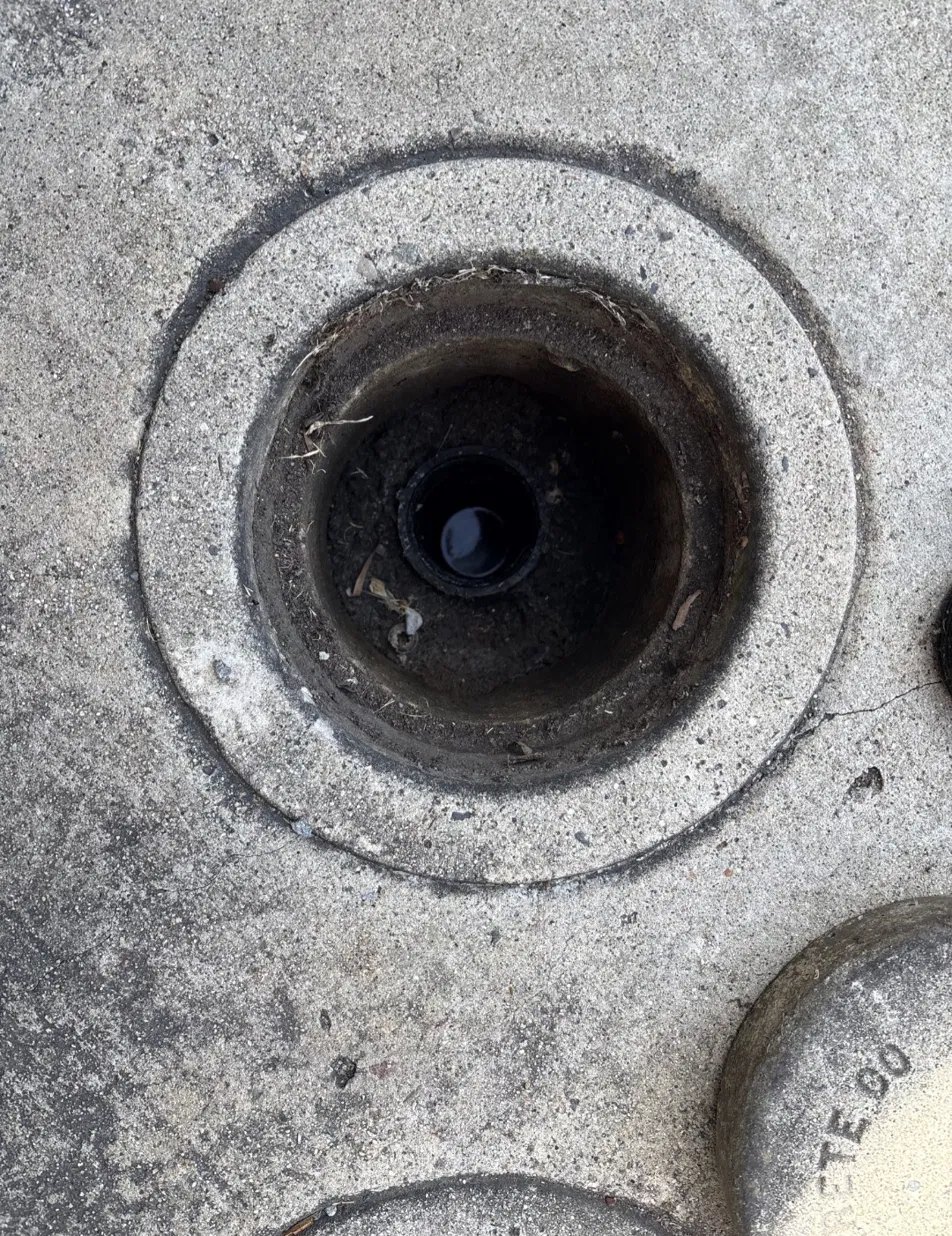
A property line cleanout is a capped access pipe that comes up to the surface near the front of your lot, usually close to the sidewalk or the curb, sitting inside a rectangular or round box. It's the door into your sewer line. Without it, there's no way for anybody to get a cable or a jetter into the pipe from that end, which means there's nothing for the City to work with.
So if your Poway home doesn't have one, the City's own guidance is straightforward. A licensed contractor installs one, and until that happens none of this applies to you.
There's a second, smaller catch too. If you have a cleanout but it's disappeared under lawn, mulch, gravel or a shrub, the City asks that you expose the box before they come out. A buried cleanout has to be dug out before the City can use it.
What the City doesn't cover
This is where people get tripped up, so it's worth being plain about it.
Everything from your house out to the property line cleanout is still yours. That's your yard, your pipe, your responsibility. If the blockage is in that run, and a lot of the time it is, that's a call to a plumbing company.
That boundary exists whether or not you have a cleanout. What the cleanout gives you is a way to use it. It's the access point that lets anybody working on your line put a camera down and actually see which side the problem is on, instead of guessing. It's also what the City needs before they'll come clean their side.
So a house without one still has the same dividing line as everybody else. It just has no practical way to reach it.
Where it usually sits
Most people have never noticed theirs, even though it's usually out in the open. On most lots it sits toward the front, either in the strip between the sidewalk and the street or just inside the property line near the curb. On older Poway lots it can be closer to the house than you'd expect.
It's a small round or rectangular lid sitting flush with the ground. Sometimes concrete, sometimes plastic, sometimes cast iron, often with a bit of grass grown over the edge. Easy to walk past a thousand times without ever registering it.
It's better to find out where yours is, or that you don't have one, before there's a backup.
Then there's the other Poway
None of the above applies to a meaningful slice of this city, because not every Poway home is on the sewer at all.
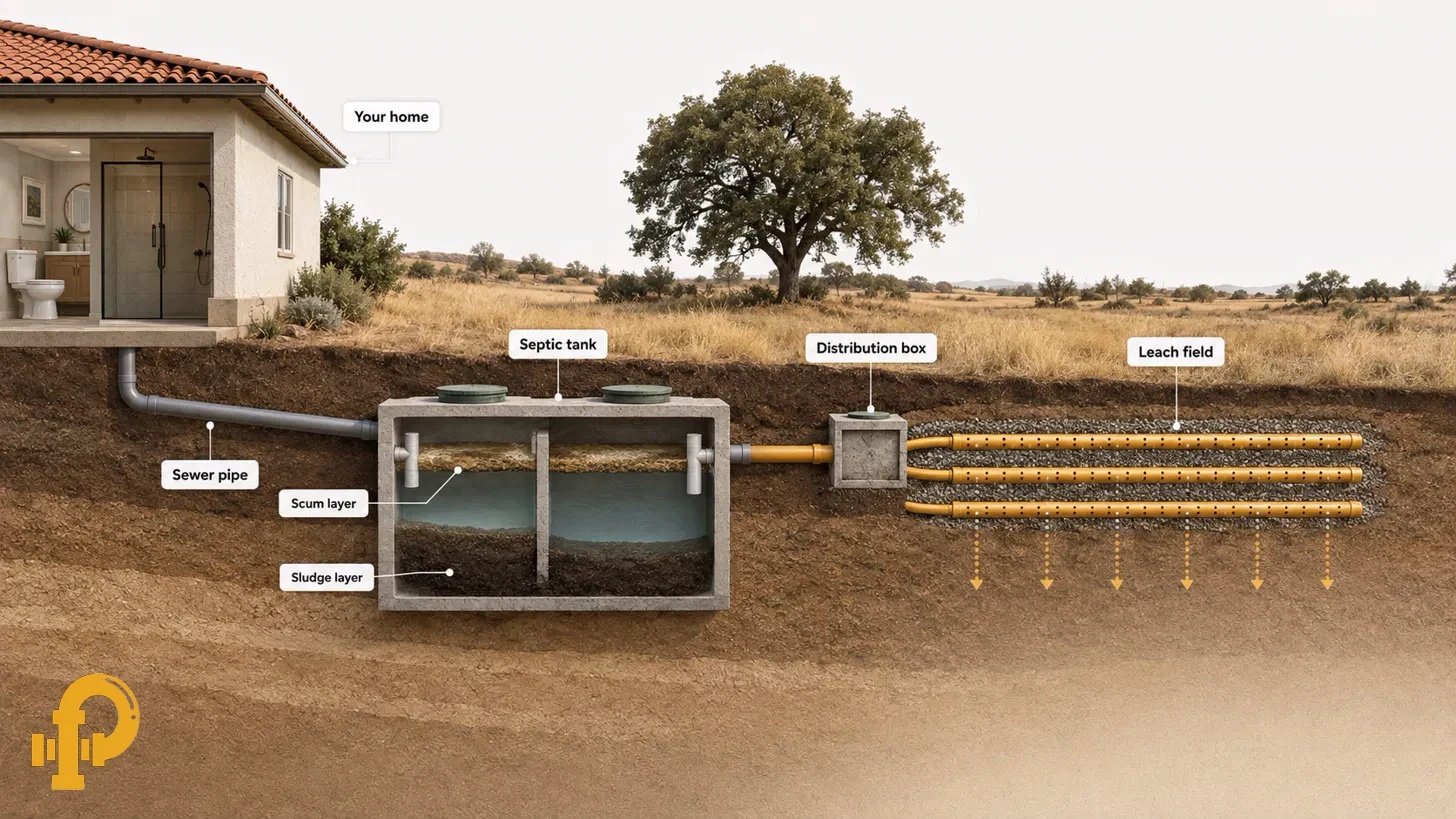
Out toward the rural edges, on the big lots, the horse properties, and the older parcels where the tract map never reached, plenty of homes run on private septic. Same city, same zip code, completely different system underground and completely different rules.
Septic in San Diego County is regulated by the County Department of Environmental Health, and that authority extends into incorporated cities, Poway included. Repairs to an onsite wastewater system aren't a casual weekend fix. The County's published rules call for a septic repair permit and a County inspection. There's a whole framework governing how these systems are sized, sited, and replaced, and it exists because a failing leach field is a groundwater problem, not just a homeowner problem.
Poway also has its own rule on the books about the two systems coexisting. Poway's own code, as published by the City, restricts keeping a septic tank, cesspool, or similar subsurface disposal system on a property that sits adjacent to a public sewer. In plain terms, if the sewer comes to your street, staying on septic isn't something you can count on forever. That's worth knowing if you own an older rural parcel and the neighborhood around you has been filling in.
If you're on septic and you're not sure whether your street has sewer available, that's worth finding out now.
Why any of this matters underground
Poway moves about a billion gallons of wastewater a year through roughly 186 miles of collection pipeline, with mains running anywhere from 8 inches up to 33 inches. That water goes off to the City of San Diego's North City Water Reclamation Facility or to Escondido for treatment, and some of it comes back as recycled water irrigating the South Business Park.
On the supply side, Poway is unusual again. Raw water comes in from the San Diego County Water Authority and goes into Lake Poway, which holds around a billion gallons and doubles as the city's emergency reserve. From there it moves through the Lester J. Berglund Water Treatment Plant, built in 1978, and out through about 317 miles of water pipe. Many cities in the county buy treated water. Poway treats its own.
The reason a homeowner should care is simple. This is a city with real infrastructure of its own, and it's been in the ground a long time. The Berglund plant has been running since 1978. Many of those 317 miles of water pipe and 186 miles of sewer pipe have been in the ground for decades, and the lateral under your yard may be just as old. Whatever is buried out there has been sitting through decades of San Diego County summers and winters.
How Pipe Patrol handles Poway
We know which parts of a Poway sewer problem belong to the City and which parts belong to you, and we'll tell you which one you're looking at.
If your line backs up, somebody comes out, finds where the trouble actually is, and explains it in plain language. If the problem turns out to sit beyond your property line cleanout, that's the City's stretch, and you should know that. If you don't have a cleanout at all, adding one is worth talking through with the contractor.
This guide is general information from public sources, not legal, code or professional advice. Rules vary by city and water agency and change over time, so check with your city, your water provider or a licensed contractor about your own situation.
Every job is performed by or under a California licensed, insured contractor.
Poway sewer questions are easiest to sort out on the phone. Everything for Poway, including the number to call, is on our Poway page. We cover Poway and San Diego County, 7am to 10pm, 7 days a week, and most holidays.