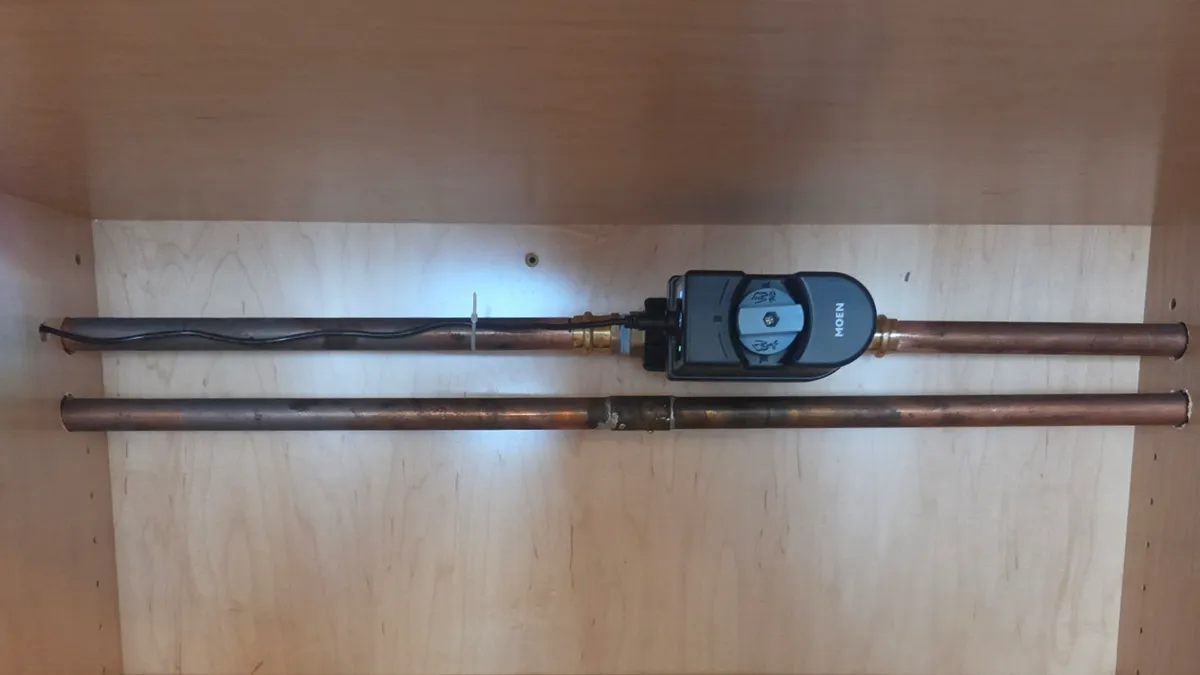
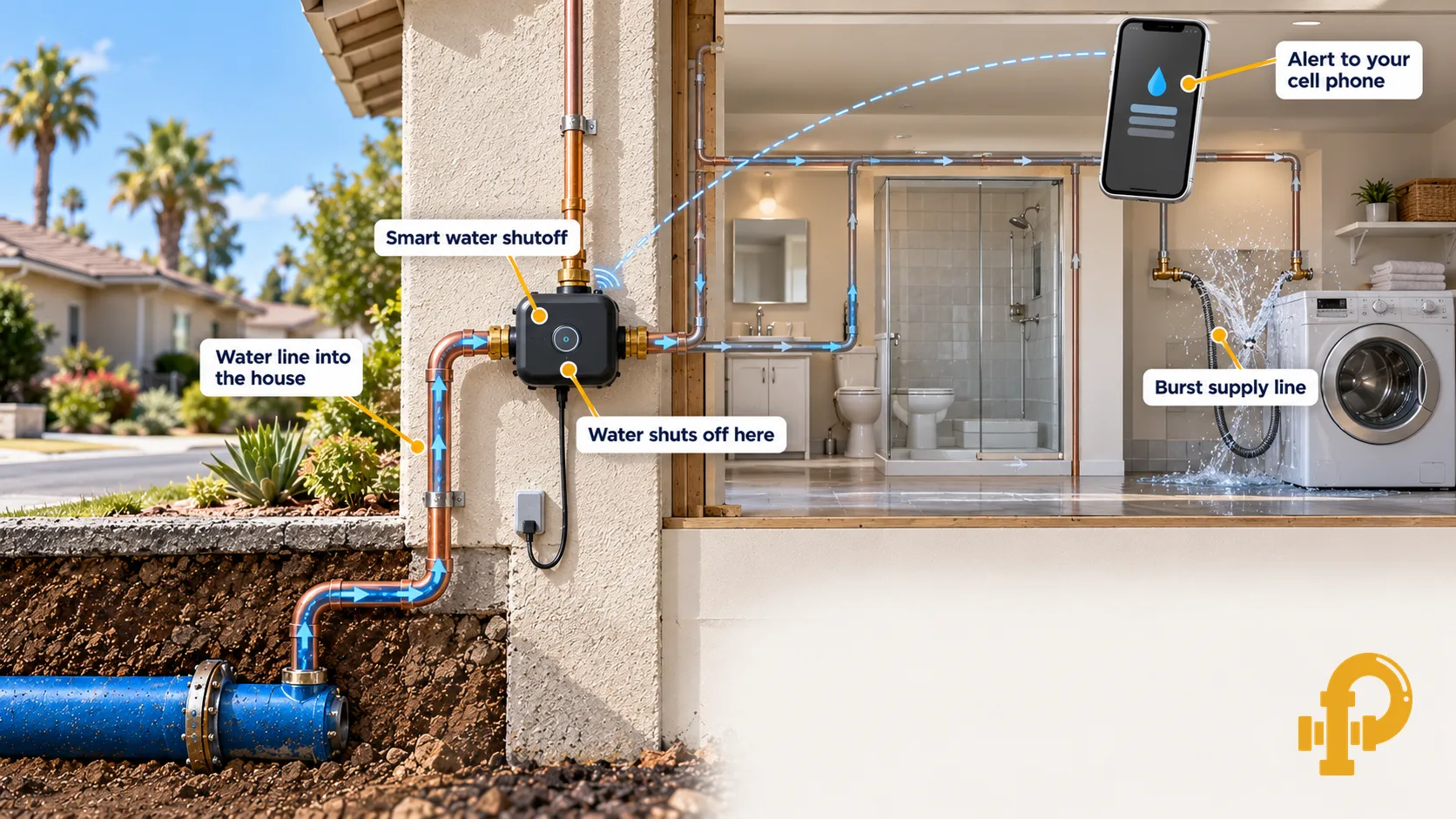
A smart water shutoff is a small device installed on your main line, the pipe that brings water into your house. If it senses a leak, it can send an alert to your cell phone and turn the water off on its own, even when you're not home.
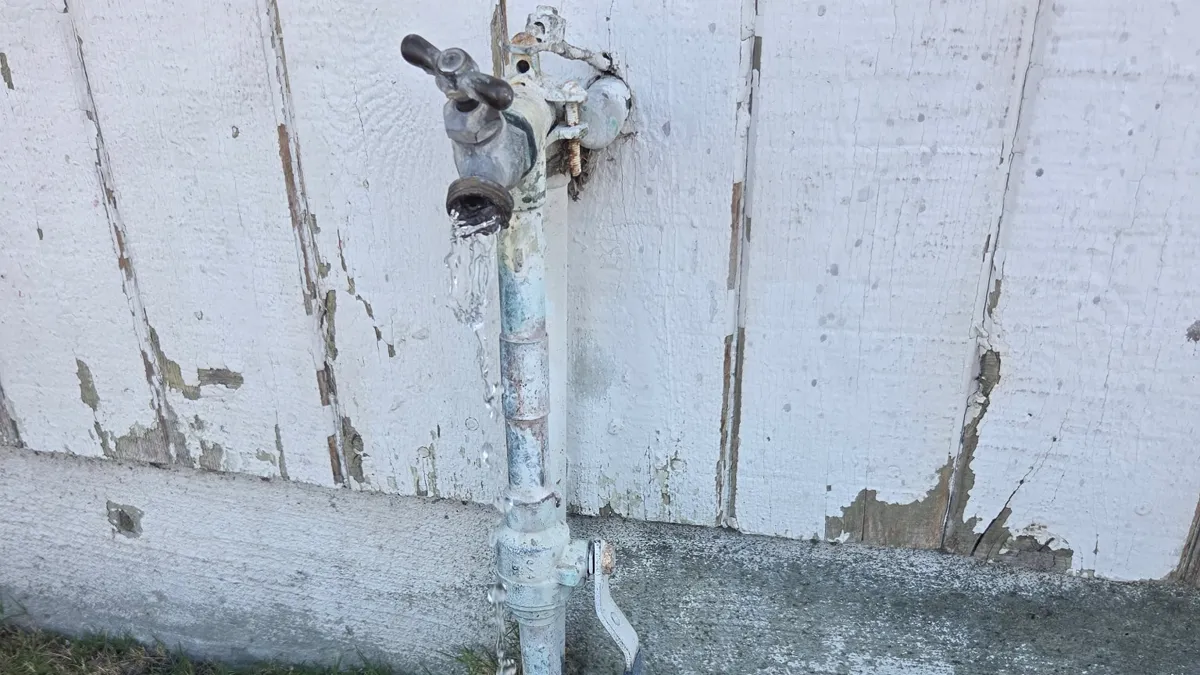
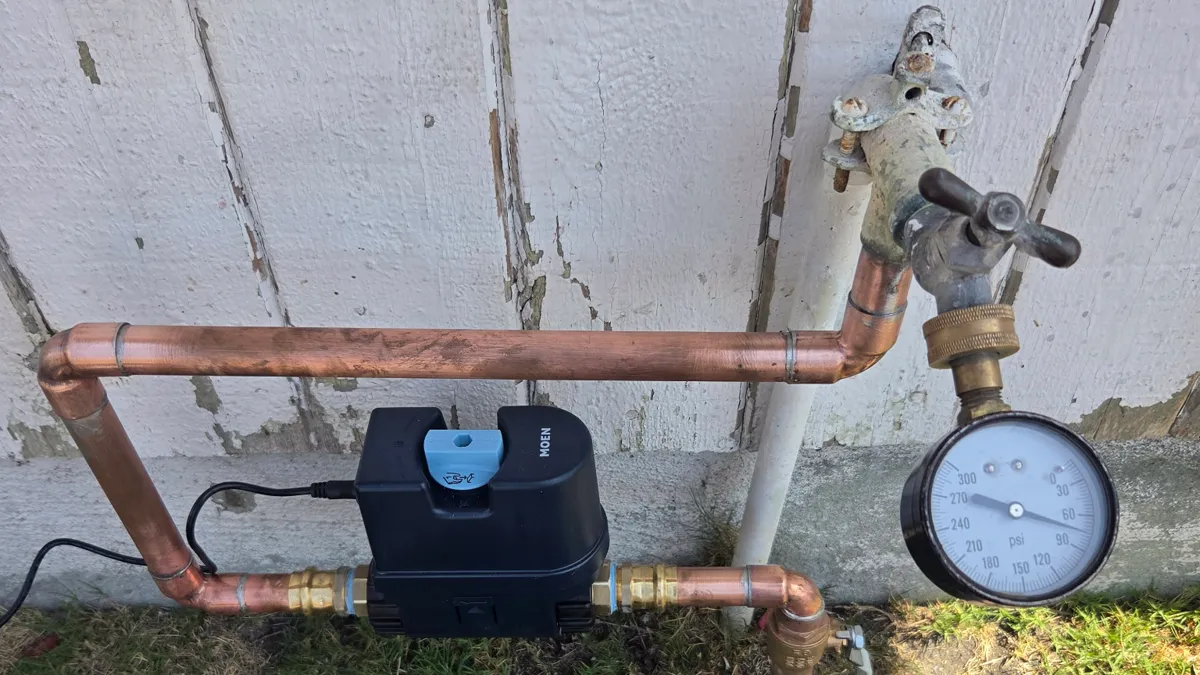
Most people have never seen one, so this is what it actually looks like installed. The device goes on the water line, usually near where it enters the house, and it needs power and a WiFi signal to reach it.
What it can do
It watches the water moving through that one pipe. Because every drop of water in the house passes through it, the device sees a pattern over time, and it notices when something doesn't fit the pattern.
A toilet that sticks open and keeps running. A supply line behind the washing machine that lets go while you're at work. A water heater that splits. Those all look the same to the device, which is water flowing when nothing should be flowing, and it can send an alert to your cell phone and close the valve on its own.
Most units also track daily use, which is how people find the slow problems. A running toilet or a dripping valve is easy to miss until it shows up on the water bill 2 months later.
What it can't do
This is the part worth being straight about, since it tends to get skipped.
It won't catch every leak. The device sits on your water supply line, so it sees water moving through that pipe. A drip inside a wall that never moves enough water to register, or a problem on a line the device doesn't sit on, can still get past it.
It won't tell you where the leak is. It knows water is moving when it shouldn't be. Finding the source still takes a person with eyes on the plumbing.
It only covers the water coming into the house. Irrigation that branches off before the device, or anything plumbed outside that line, isn't being watched.
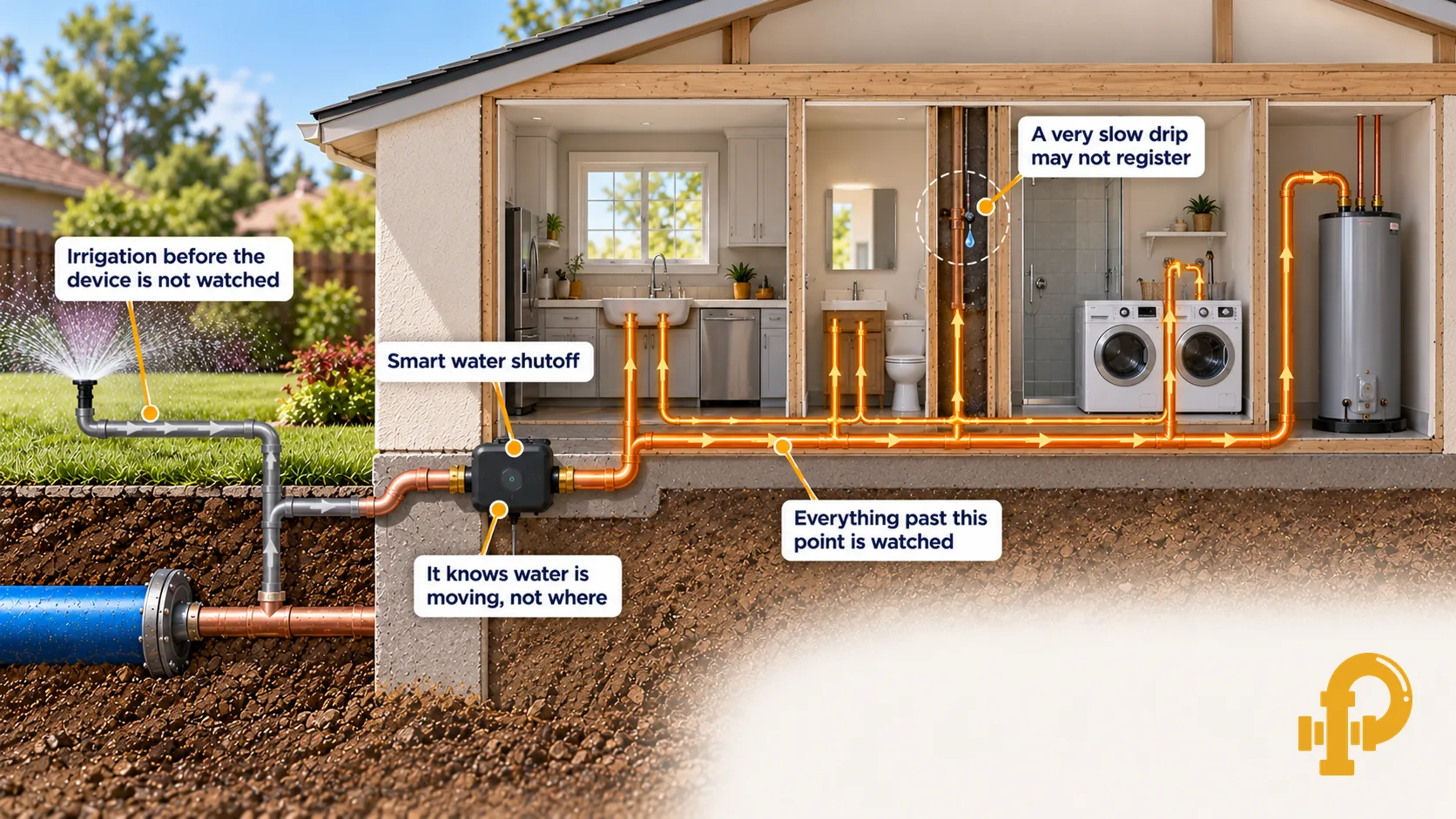
So it's a very good early warning on the biggest category of water damage, and it doesn't cover all of it. Worth knowing that going in.
Homes where it makes the most difference
Homeowners, mostly. If you own the house, a burst supply line is your problem and your deductible, and this is one of the few devices that can stop the water before anyone gets home.
It's worth more in some houses than others. A 2 story home has water running above finished ceilings. Some houses in the county have water lines running beneath or through the slab, which makes a leak harder to see and harder to reach. A converted garage puts drywall and flooring directly in the path.
It also makes sense if the house sits empty for stretches. A second home, or a rental sitting empty between tenants. Nobody is there to hear the water running, but the device can still catch it.

What's actually available
Several manufacturers make these, and they work in broadly similar ways with different strengths.
Moen Flo. Runs a daily test on your plumbing to check for small leaks.
Phyn Plus. Reads tiny pressure changes in the water to tell which fixture is running, which helps it pick up slow drips.
StreamLabs Control. Monitors the water coming into the house and can shut it off when it detects a leak.
Watts Leak Defense. Can pair with leak sensors placed around the house.
Frizzlife. Covers the core job of monitoring the water and shutting it off.
We don't push one brand. Which one fits your house has more to do with your plumbing than with the feature list.
The insurance question
A lot of people hear that a smart shutoff saves money on homeowners insurance. Some insurers do have programs tied to these devices, and some don't. What's available depends on the carrier and the policy, and it changes.
If that's part of why you're considering one, it's worth asking your insurer before you buy anything. They'll tell you whether they offer something, which devices qualify, and what they need from you. That's a better answer than anything we could give you.
What decides which unit fits
This is where most of the real decision gets made, and it's not about features.
The size of your water line. The device has to match the pipe.
Your water pressure. Some units handle higher pressure better than others, and pressure in this county varies a lot by neighborhood and elevation.
Where the line comes into the house. Some installs are simple. Some are in a crawl space, behind a wall, or out in a planter.
Whether there's a good spot with power and WiFi. The device needs both. A strong signal at the kitchen counter doesn't mean a strong signal at the side of the house behind stucco.
That's why the answer to which one you should get usually starts with somebody looking at where your water comes in.
How this works with us
1. Give us a call and tell us which unit you're looking at, or what you'd like it to do.
2. We set up a consultation with the contractor at your home.
3. The contractor evaluates the areas in your home, goes over various options, and answers any of your questions.
4. You decide which route to take, and we take it from there.
This guide is general information from public sources, not legal, code or professional advice. Rules vary by city and water agency and change over time, so check with your city, your water provider or a licensed contractor about your own situation.
Every job is performed by or under a California licensed, insured contractor.
We coordinate smart water shutoff installation across San Diego County and the surrounding areas.
See the smart water shutoff page for San Diego, Coronado, El Cajon, Escondido, Fallbrook, Imperial Beach, La Jolla, La Mesa, National City, Poway, Santee or Temecula.
We're reachable 7am to 10pm, 7 days a week, and most holidays.