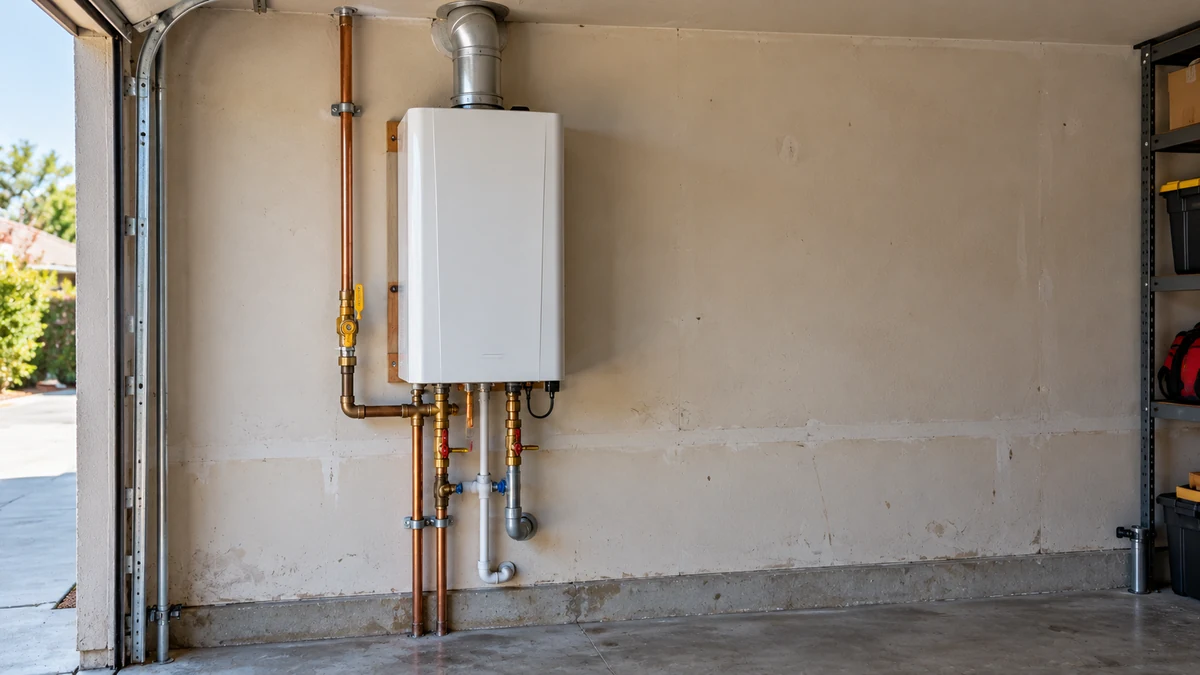
You have a water heater in the garage, or the closet, or out on the side of the house. It works. Every so often somebody tells you that you should go tankless, you nod, and you never really find out what they meant.
The short version: a tank is usually the simpler swap and the easier thing to replace. A gas tankless saves space, generally uses less energy than a conventional gas tank since it isn't keeping 50 gallons hot all day, and doesn't run out partway through the third shower. It also takes more work to put in, and it has to be sized for your house. Here in San Diego there's one more thing to weigh, which is the water.
That's the decision. The rest is why.
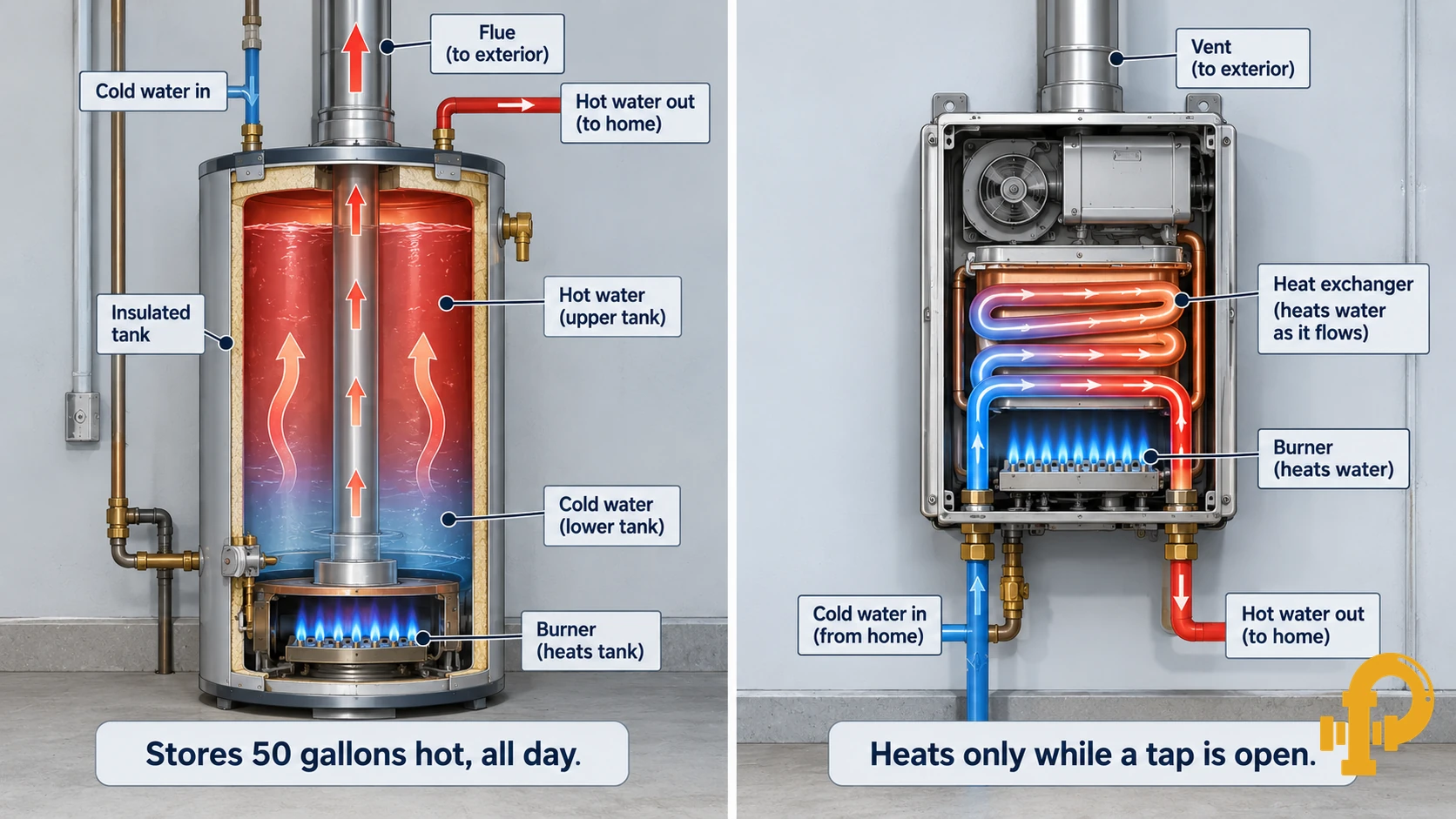
There's no tank. So how does the water get hot?
It gets heated inside the unit as the water moves through it.
A traditional tank water heater holds 40 or 50 gallons and keeps all of it hot, using a gas burner or electric elements. That's why there's already hot water stored and ready, and it's also why you run out. You've used what was in the tank and now you're waiting on it to heat another one.
A tankless, sometimes called an on demand water heater, stores nothing. Open a hot tap and water starts moving through the unit, where a gas burner heats it, and out into the home's hot water pipes. Close the tap and it stops. Nothing is being kept warm because there's nothing in there to keep warm.
That's the difference, and most of what people argue about comes out of it.
So why do people want one?
There are three good reasons people look at tankless.
It doesn't run out the way a tank does. Sized correctly, people can shower one after another without working through a stored supply.
It's small. A tank takes a corner of the garage or a whole closet. A tankless hangs on the wall and is about the size of a carry on suitcase. For plenty of people that space is the actual reason they call.
It also isn't burning gas to keep water hot while the house sits empty all day.
Those are real advantages. There's something worth checking before you buy, though, and in San Diego it matters more than most places.
San Diego water changes the math
Hard water leaves mineral behind inside whatever heats it, and ours is hard enough that the manufacturers put a limit in writing.
In the installation manuals we looked at, Rinnai and Navien both cap total hardness at 200 mg/L, which Navien puts at 12 grains per gallon. Past that, both call for water treatment, such as a softener or a scale control system approved for the equipment.
That matters here because our water is often harder than that. The City's water quality page puts San Diego around 16 grains per gallon. The City's own 2025 report puts its three treatment plants closer to 14. All three are over the line those manuals draw, though water the City buys already treated averaged below it, and your own address can read higher or lower. If a different district supplies you it's a different number again.
The manuals also say what happens when nobody deals with it. Rinnai's: "Replacement of components due to water quality damage is not covered by the warranty." Navien's: "Damage caused by poor water quality is not covered under warranty."
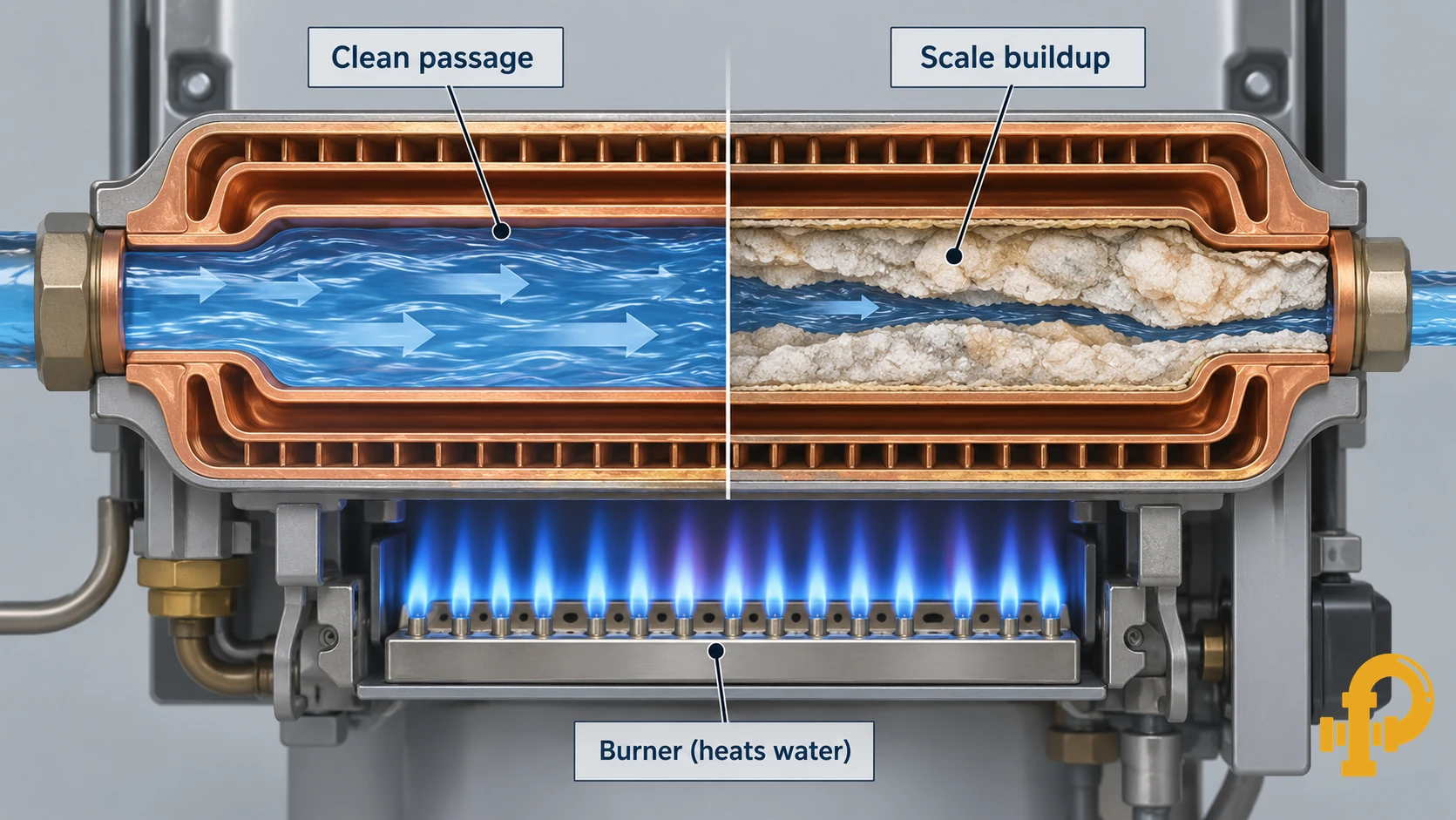
Both kinds collect mineral. The difference is room. A tank has space for it to settle at the bottom, though that buildup causes its own problems over time. A tankless runs water through much narrower passages wrapped around a burner, so scale has far less room to build before it starts affecting how the unit heats.
One thing to know if you're thinking about softening the whole house: a softener protects a tankless, but the A.O. Smith manual we looked at says softened water calls for checking the tank's anode rod every year rather than on the usual schedule. Worth raising for whichever one you end up with.
What maintenance does each one need?
Neither is maintenance free, and that's worth understanding before you buy rather than after.
A tankless gets flushed. A cleaning solution runs through it to dissolve the mineral building up inside. Navien's NPE installation manual, March 2020 revision, puts hard water at once a year for a home, for units with no treatment fitted. Yours depends on your water and your manufacturer's instructions.
A tank gets drained and inspected. The A.O. Smith manual we looked at asks for draining every 6 months to clear sediment, plus checking that anode rod, which is sacrificial metal that corrodes so the tank doesn't. Other models set their own intervals.
A lot of the homeowners we talk to don't realize either one needs anything at all.
So which one makes sense for your house?
If what you have keeps up, you've got room for it, and nobody's complaining, there's no reason to switch just because tankless is newer.
If four people shower back to back, or you're tired of running out, or you want that tank off the garage floor, tankless is worth looking at.
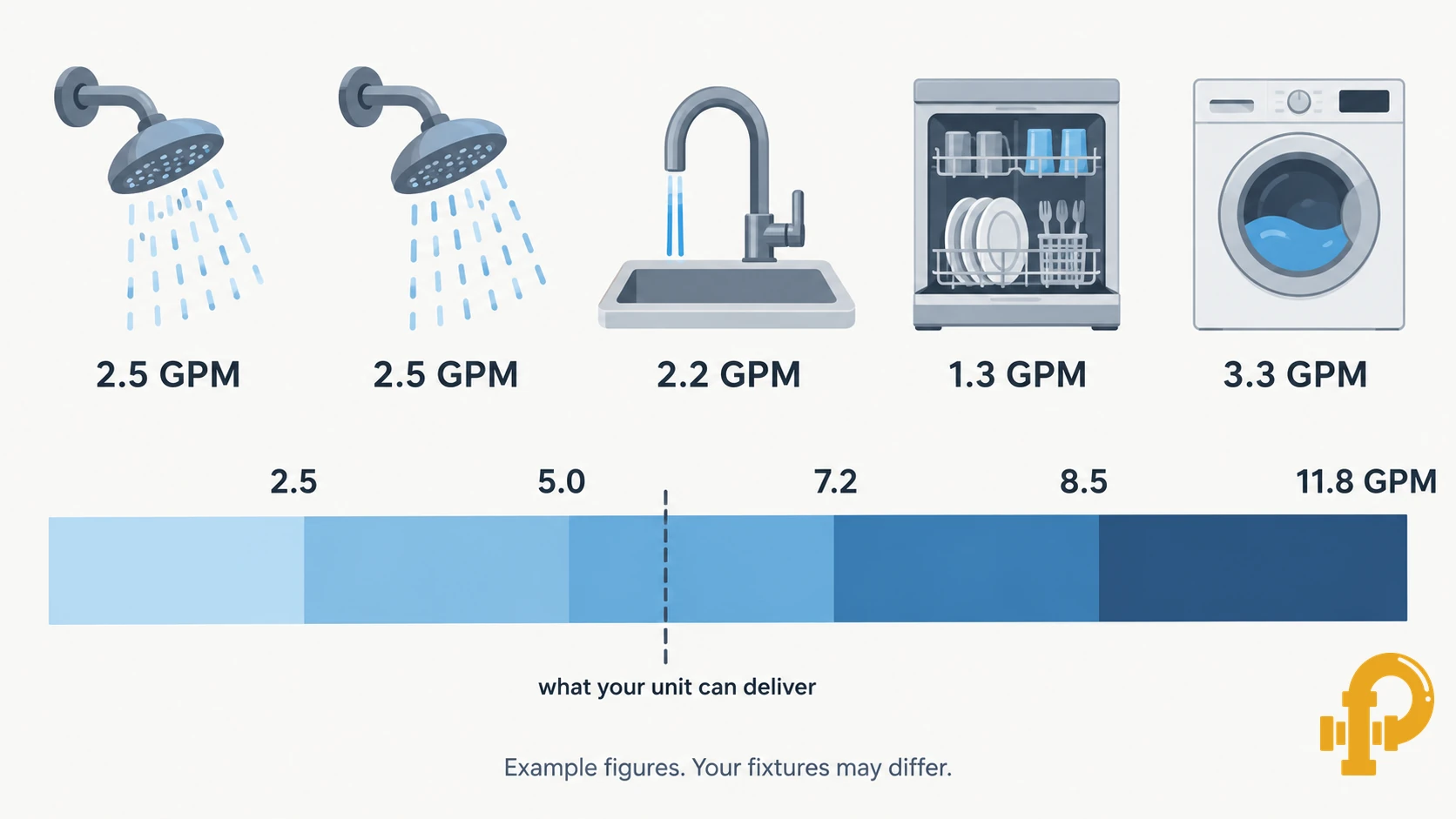
The one that needs real thought is the busy house, because a tankless is rated by gallons per minute, meaning how much hot water it can turn out while it's running, rather than how much it holds. ENERGY STAR's example figures put a shower around 2.5 gallons a minute, a washing machine 3.3, a sink 2.2, a dishwasher 1.3. A properly sized tankless handles one shower without much trouble. Two showers, the dishwasher and a load of laundry at the same time is a different machine.
On money, it depends on your house. Putting in a tankless is usually more work than dropping in another tank, since the gas line and the venting often have to change. Running one generally takes less energy than a conventional gas tank, because it isn't heating water nobody's using. Whether the energy savings make up for the bigger install depends on how much hot water your household actually goes through, and on what that install turns out to involve.
Neither one gets a free pass on the water either. Pick the machine without deciding what you're doing about scale and you'll be unhappy with either.
Where Pipe Patrol comes in
When you call, we start with the same things we've talked about here.
You get a coordinator, not a sales department. What do you have now, how old is it, where does it sit, how many people are using hot water, and what's actually going wrong. You don't need to know your model number or what size you have. Tell us what the hot water is doing and we'll work out what's worth looking at first.
Then a licensed, insured contractor looks at what's really there and tells you what they see. If the tank you have is fine and just needs service, that's what you'll hear.
Trying to work out which one belongs in your house? Call (858) 324-6400 and let's talk through what you've got.
This guide is general information from public sources, not legal, code or professional advice. Rules vary by city and water agency and change over time, so check with your city, your water provider or a licensed contractor about your own situation.
Every job is performed by or under a California licensed, insured contractor.