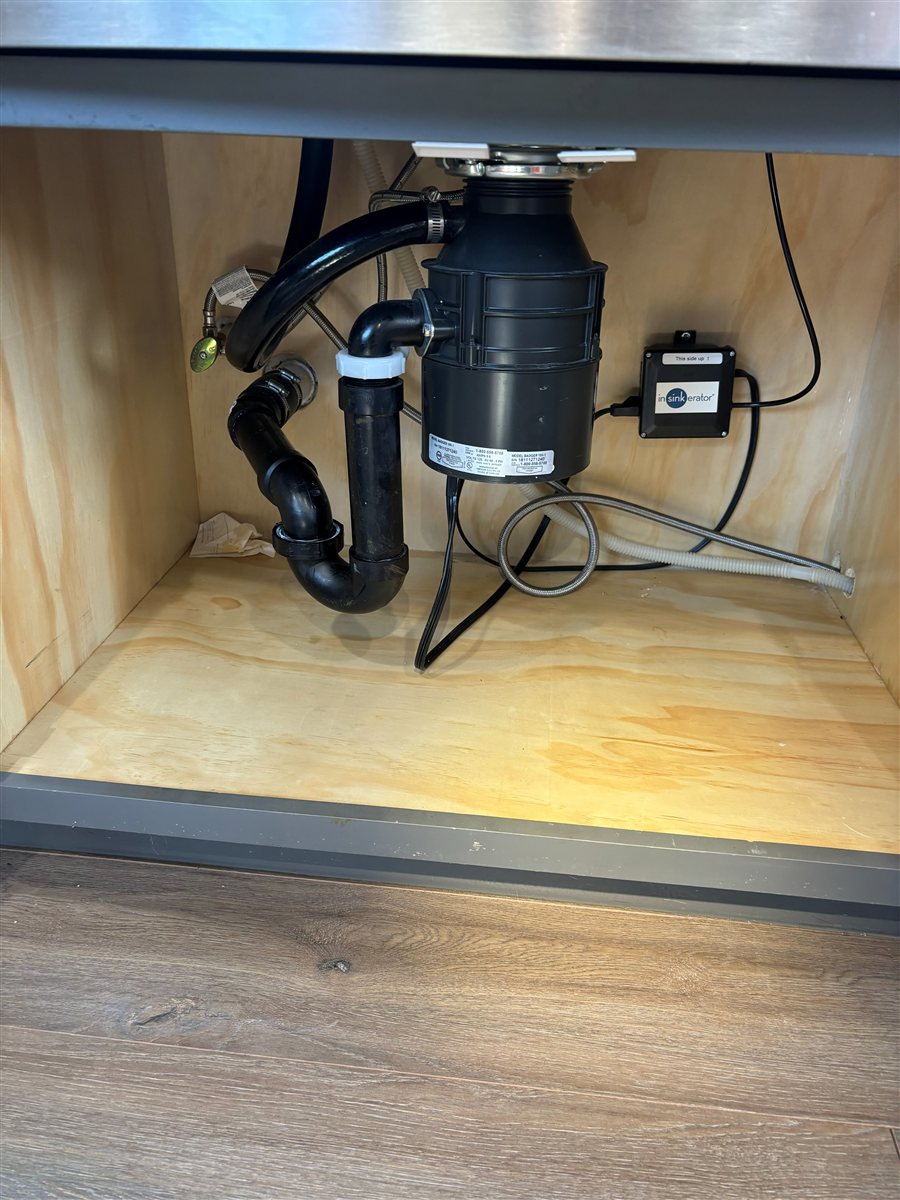
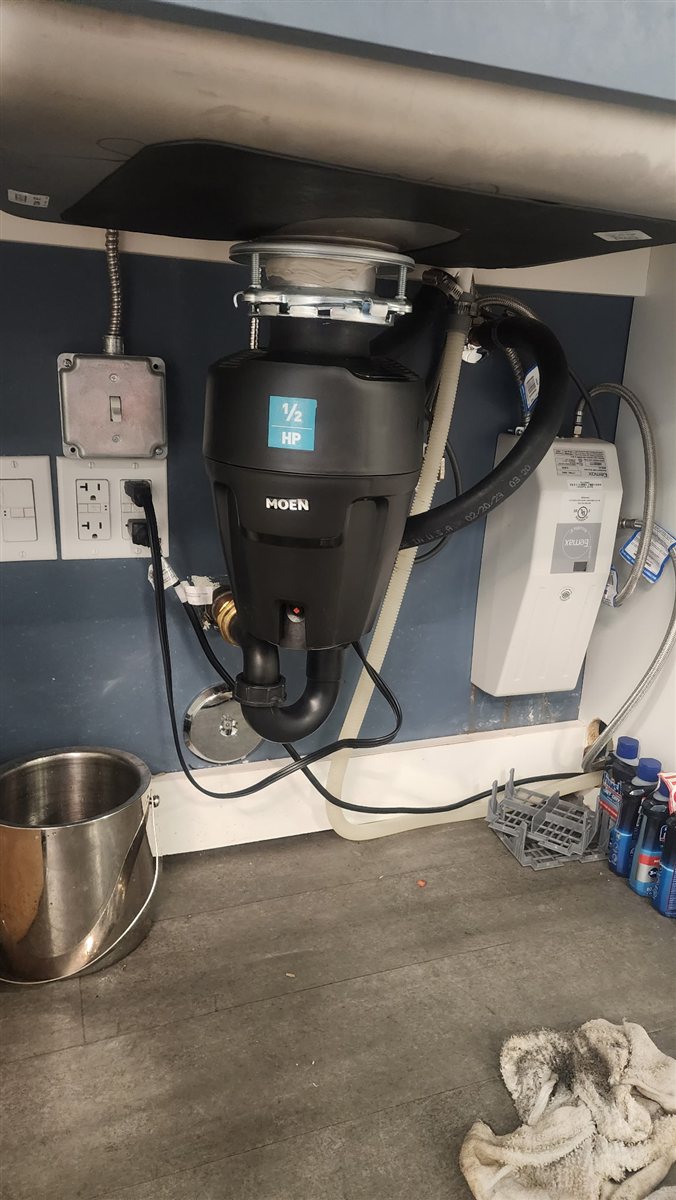
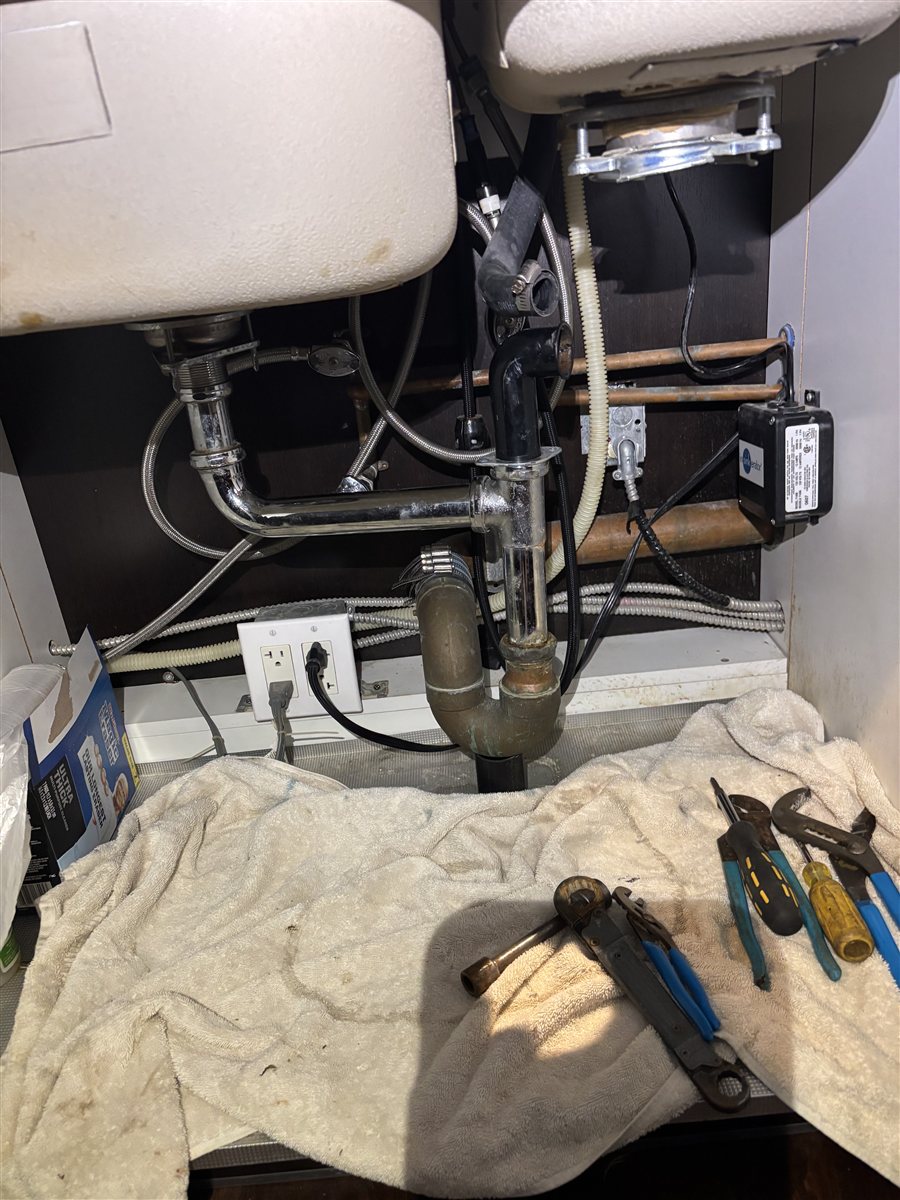
A dead disposal isn't a project. Most are fixed or swapped in one visit.
East County kitchens work their disposals hard, big families, real cooking, decades of service in the older houses, and when one finally quits, the household feels it immediately. The good news is that disposal problems sort into a short list, and the list reads fast. Humming but not spinning, that's a jam, and jams are the most fixable failure in the kitchen. Leaking underneath, that's seals or housing, a real judgment call. Silent entirely, that's electrical or motor, and motor is where replacement stops being a maybe.
Jams earn their reputation as the common failure because kitchens are busy places. Fibrous scraps wrap the impellers, something hard slips in during cleanup, the works lock, and the motor hums against the blockage. The proper clearing takes the right tool and hardly any time, and the proper part matters, both for hands and for the unit, because forcing a jammed disposal finishes motors early. The visit that clears it also reads the aftermath honestly, some jams pass without a trace, some leave damage that changes the math.
When the math says replace, the recommendation says replace, plainly, with the reasons visible. The new unit gets sized to the household's actual cooking, not the biggest one on the truck, installed with the plumbing connections done properly and tested before the visit ends. In houses where the disposal shares sixty year old drain lines, the install also gets a look at what it connects to, because a new disposal draining into an old problem is half a fix. Plain English, honest calls, kitchen restored. Simple as that.
"A humming disposal usually isn't dead. Most of the time it's just jammed."