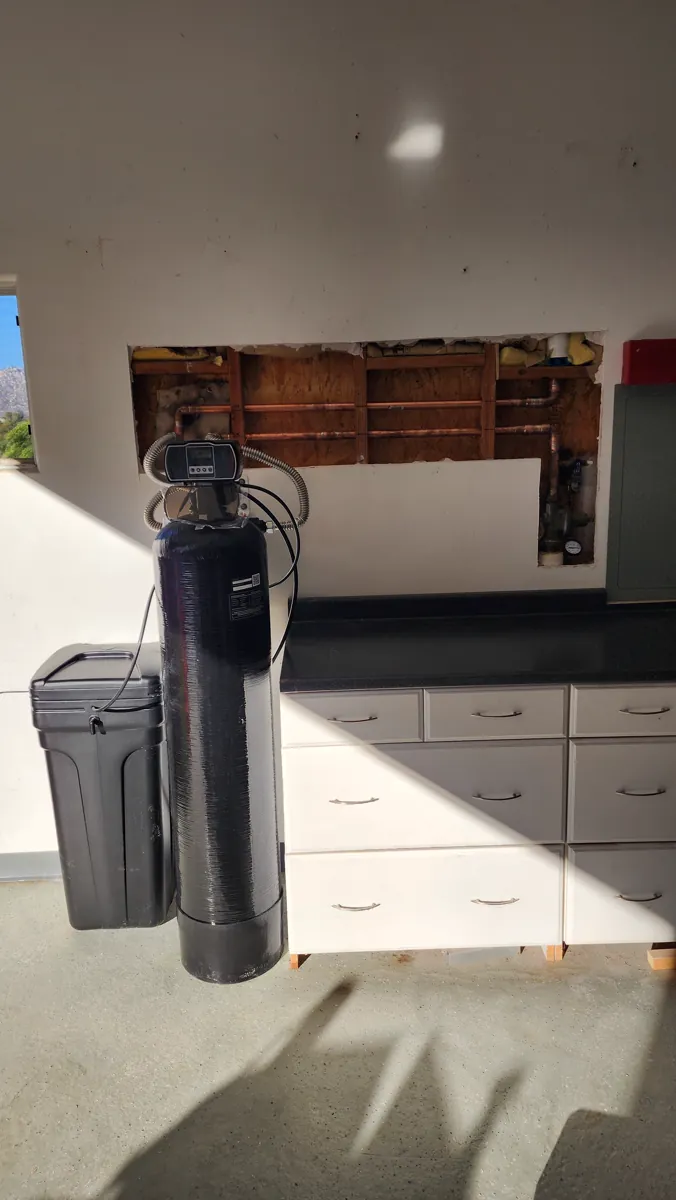
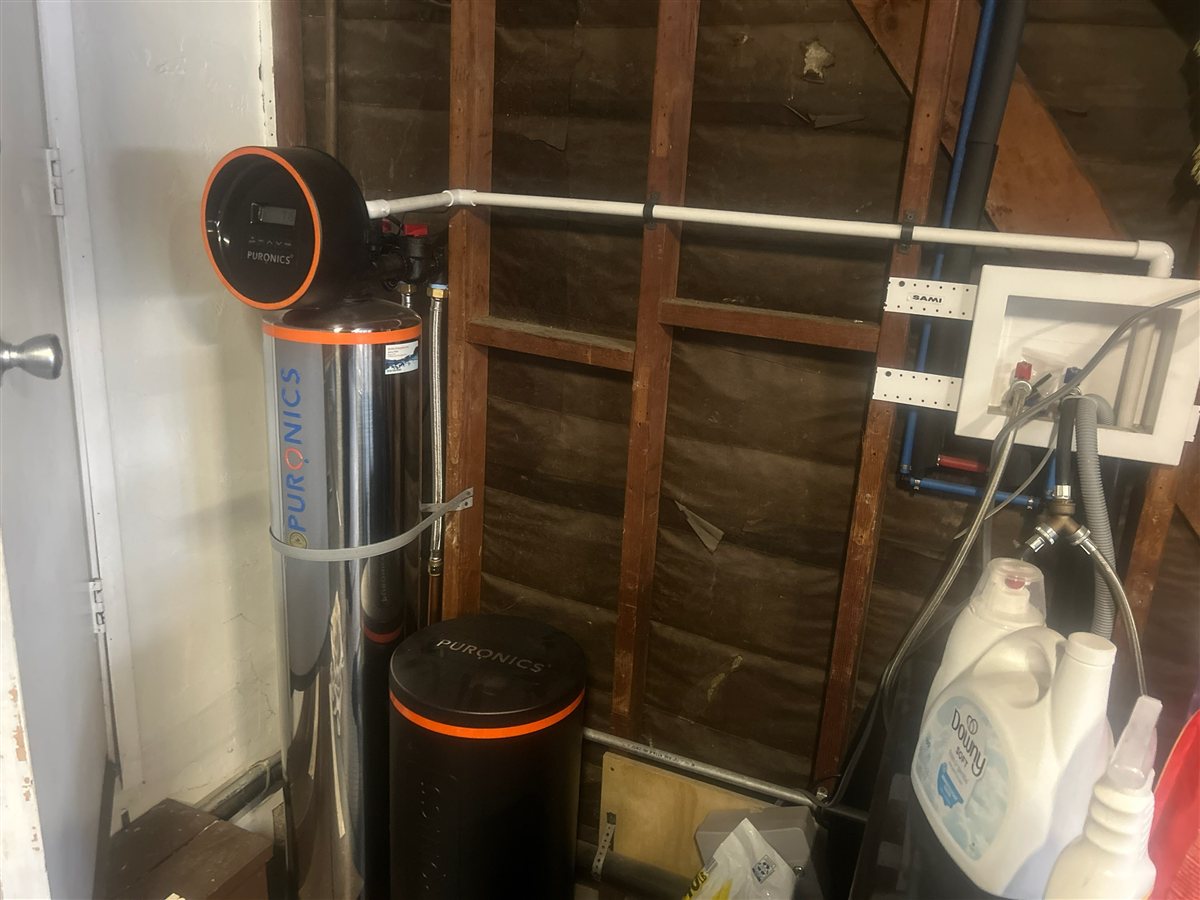
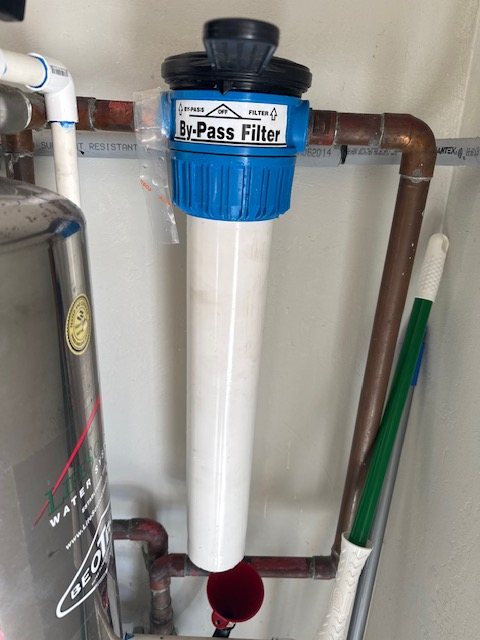
East County water leaves its signature in white crust.
Out here in the box, the water works hard on everything it touches. East County runs some of the hardest water in an already hard county, and El Cajon households see the evidence daily, the crusted shower heads, the spotted glasses, the water heaters that retire early, the skin that never quite feels rinsed. None of it is a mystery. It's minerals, calcium and magnesium doing what they do, and the question isn't whether your water is hard. It's whether you're done living with what hard water does.
The fixes sort into two honest jobs. Softening pulls the minerals out of the equation, and the whole house notices, plumbing stops scaling from within, the water heater stops fighting for its life, fixtures stop crusting, showers start rinsing clean. Filtration handles the other conversation, taste, odor, and whatever the bigger question is that's been circling, because plenty of families out here have one, and looking into it beats wondering about it. The two systems do different work and often work together, and which combination fits is a household by household answer.
That answer comes from a plain English conversation, not a pitch. What's actually in your water, what each system genuinely does, what whole house treatment involves versus a point of use setup, what the maintenance really looks like over the years. Every option with its honest tradeoffs, the decision entirely yours, at your pace. Sixty years of hard water built the evidence in your house. One conversation lays out what to do about it.
"You can read the water on the fixtures."